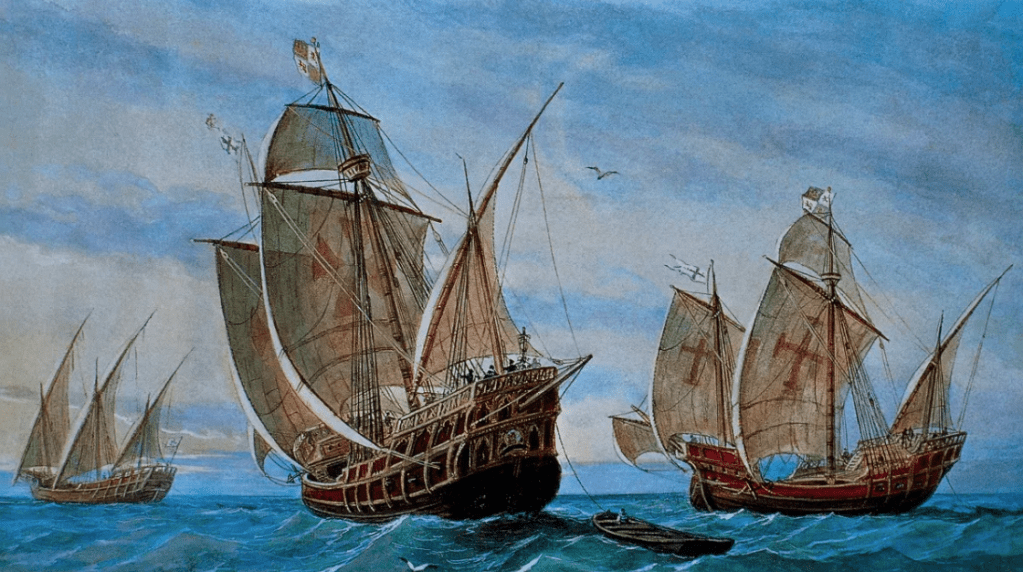
Among the eclectic variety of seasonal songs, delivered with appropriate gusto by the SongWave Choir over our weekend of concerts, the lower voices shared in a Humberside version of the carol ‘I Saw Three Ships.’ As related in the programme notes, the connection of the ships to the heralded events surrounding the Nativity was finally clarified when the boisterous verses were collected on the northeast coast of the British Isles.
But there are several possible interpretations, besides the one related by the call-and-response interplay of choristers. We sang about the carrying of ‘three crawns’ to Coln-upon-Rhine, embarking from Beth-el-le-hem. That intrepretation has it that the craniums of the three Magi who adored the Christ Child were carried with care by the three ships to Cologne where they rest in that city’s great cathedral. The great estuary of the Humber may have been a calling point when the ships passed by. All very plausible, but there were earlier collections from Cornwall, according to WikiPedia (‘I saw three ships’) and the reference to three ships could relate to the King Wenceslas’ coat of arms (‘azure three galleys argent’) or, as I learned as a young boy, to the common designation of camels (the legendary carriers of the kings) as ‘ships of the desert.’
Certainly the sailors plying their trade around the Humber estuary had their own idiosyncratic version, and that was the one we enjoyed singing together. There were two other numbers that our audiences particularly appreciated: Alilo, a Georgian chant of Alleluia, and Sherburne, a version of ‘While Shepherds Watched’ delivered in robust shape note style.
Our singing felt the more exalted in performance than ever it was in rehearsal. Perhaps it was the different acoustic spaces where we performed that conspired to enhance the choral sound, but it may also have been the adrenaline of the show. As a group, we wanted to put on our best, and that focus helped our concentration.
There was, indeed, great joy at each concert, seductive and inspiring, not to say moments of transcendence, when we became more than individual singers and our voices blended together. In no number, perhaps, more so than in Alilo with its great and sonorous repetition, and hence the more rapturous audience reception.
Alleluia indeed! Our ear-worms echoing with such paeans to the joys we can share, if we put our hearts and minds to it, we braved the windswept rain during the final deconstruction of the choir’s staging on Sunday evening, and dashed back home to our hearthsides to contemplate the wonders of life.
It may well be that the Magi, in their adoration, had no monopoly on a sense of bliss at being in the moment, present for the revelation of a great mystery.

 Roads to Joy
Leave a comment